

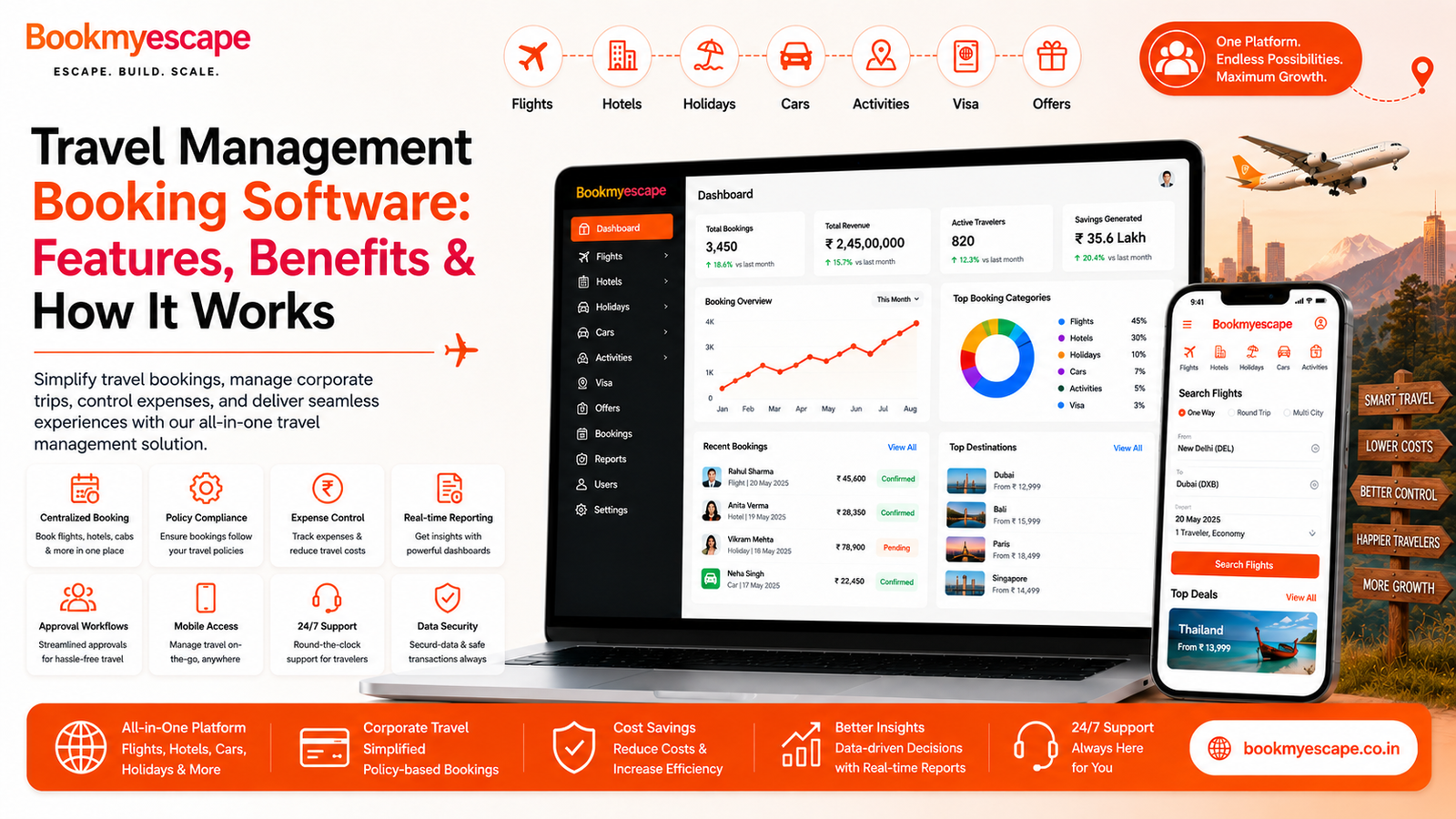
Running a travel business becomes complicated long before the business itself feels big. A few bookings can be managed through email spreadsheets and messaging apps. But once bookings start coming from different channels suppliers need to be coordinated payments have to be tracked and customers need quick updates those simple methods begin creating more work than they save. This is exactly where travel management booking software truly becomes useful. Instead of managing bookings, suppliers , customers payments and internal operations across separate tools you can bring these activities into one connected system. For travel agencies and tour operators the goal is not simply to have another booking tool. The real value comes from having a system that keeps the entire booking process organized from the first search to the post booking service.
What is a travel booking management system?
Travel management booking software is basically a technology platform that helps you manage your booking operations through a centralized system. Depending on the business model it can support flight hotel transfer activity packages or other bookings. A Travel Management System typically connects booking workflows with suppliers, customers , agents and payments. Instead of maintaining separate records for everyday part of booking you can manage these activities through a common platform. Exact functionality depends on software and business requirements. A corporate travel company might need approval workflows and traveler policies while OTA might focus more heavily on online bookings and supplier connectivity. This is the only reason why choosing a travel management system based only on a long feature list can be misleading. The system must match how the business actually sells and manages travel.
Why do travel businesses need travel management booking software?
The problem usually appears when booking volume increases. A booking might begin with a customer inquiry move to availability checking required. Supplier confirmation involves payment collection and eventually causes a confirmation or voucher. If each stage is handled separately staff might have to enter the same information several times. For example a hotel booking might involve checking availability on a supplier platform, recording the selected room in spreadsheet, sending payment details to the customers, updating the booking manually and then forwarding the confirmation. You need to multiply that process across dozens or even hundreds of bookings and small administrative tasks quickly become a major operational burden. A central system reduces this fragmentation. Your team can work from the same working information while automation handles repetitive steps where appropriate. The benefit is not just saving time. Better organization can also reduce duplicate data entry and missed updates.
How does a travel booking management system work?
1. Search and availability
The process starts when your customer or internal employee searches for travel service. Depending on the platform the system might retrieve availability and pricing from connected suppliers or apis.
2. Selection and booking
Once the option is selected the system captures the required booking information. This can include traveller details, travel dates and pricing. The booking is then submitted through appropriate supplier or internal workflow.
3. Payment processing
Payment can be connected to the booking process so the business can track what has been paid, what remains outstanding and which method was used. It is especially important when a business handles different customer types and currencies.
4. Confirmation and documentation
After successful booking and payment the system can generate or distribute relevant booking confirmations or voucher vouchers. Keeping all these documents connected to the booking makes it easier for your staff to retrieve the correct information later.
5. Post booking management
The process does not end when confirmation is made. Customers might request changes or cancellation. A useful travel management booking system should therefore support booking workflow instead of treating the original booking as the end of the process.
The features that actually matter in Travel Management System
There are many travel software platforms with long feature lists. But a long list does not mean the software is right.
Multi product booking
If your business sells several types of travel products the system should support the products that are relevant to your operation.
Reservation management
Your team should be able to understand the status of the reservation including confirmed or pending bookings.
Customer management
Customer and traveller information should be easy to access along with relevant booking history.
Supplier and API connectivity
Your travel business often depends on external suppliers and technology providers for inventory. The ability to connect with required APIs and supplier systems can therefore be an important part of the decision.
Payment management
Payment should fit naturally in your reservation process. with transaction information connected to the relevant booking.
How travel management software benefits different types of travellers?
The value of travel management software depends heavily on the type of business using it. Travel agencies can use it to coordinate bookings and maintain customer information more effectively. If you are a tour operator you might need stronger control over packages and departures. Corporate travel companies often have additional requirements around policies and approvals. DMCs might need to coordinate multiple supplier services and customer itineraries. And evaluating a software it is always better to ask if this fits our business model? Rather than just asking how many features does it have?
How to Evaluate Travel Management Booking Software Before Choosing It
Once you start comparing providers, avoid getting distracted by impressive demonstrations and long feature lists.
Use a simple business-focused checklist.
| Evaluation Area | What to Ask |
| Booking Workflow | Can it manage the full reservation lifecycle? |
| Inventory | Does it connect with the suppliers you need? |
| B2B/B2C | Does it support your sales channels? |
| Payments | Can payment and booking status be connected? |
| Operations | Can staff manage changes and cancellations efficiently? |
| Integrations | Can it connect to existing systems? |
| Reporting | Can management access useful business data? |
| Scalability | Can it handle increasing users and bookings? |
| Support | What assistance is available after implementation? |
The hidden benefit: fewer gaps between departments
One of the less obvious benefits of a connected travel booking management system is better communication between teams. Think about what happens when sales reservations and finance all work with different information. Sales might know what the customer is requesting reservations might know what was confirmed. Finance might know what was paid and customer support might have a separate record of the latest conversation. When these teams don’t have access to the same operational information small gaps can quickly become bigger problems. A centralized travel booking management system can help bring sales reservation finance customer support and supplier management closer together within the same workflow.
What if the booking goes wrong?
A good travel system should not only be judged by how well it handles successful booking. Real travel operations are rarely predictable. What if the payment succeeds but the booking fails? The business needs a way to reconcile the transaction and determine what should happen next. What if a customer wants to modify a reservation? Staff should be able to locate the booking clearly and understand its current status. What if supplier availability changes after the customer has searched? Or the customer cancels? These situations are where the strength of a booking workflow becomes apparent. When evaluating a software don’t ask only can it create a booking? Ask what happens when something goes wrong? This question can tell you much more about whether the system is suitable for real world operations.
How do integrations determine the real value of a travel management system?
Travel technology rarely works like an isolated application. Depending on the business a travel management system might need to connect with flight APIs or hotel APIs besides activity suppliers and payment gateways. For example an OTA might need supplier connectivity to access travel inventory. A travel agency might need CRM integration to maintain customer information. A finance team might need payment and accounting data to flow into its financial process. This is the only reason why integration capability deserves serious attention in the buyer process. A travel management system should not be evaluated as a standalone application.
What should a travel management system look like as your business grows?
The system you choose today might need to support a very different business a few years from now. You might add new suppliers, travel products, agents, customers and booking channels. Transaction volumes might increase and you might even expand into new destinations. This is the only reason scalability should be considered from the beginning. Your technology might also evolve. AI assisted travel planning, automated customer communication and personalized recommendations are becoming part of the technology conversation. But the goal should not be to add technology simply because it is new.
So you need to know that Travel Management System A travel management system should do way more than just store reservations. Its real value comes from connecting the different stages and people involved in the travel booking process. Ultimately good travel management booking software should not make your team work around technology. If you are looking for the best travel management system you can connect with experts at Bookmyescape.
FAQ’S
1. What is travel management booking software?
Travel management booking software is a centralized platform that helps travel businesses manage bookings, availability, customer information, suppliers, payments, confirmations, and post-booking services in one system. Depending on the business model, it can support flights, hotels, transfers, activities, packages, or other travel products while connecting customers, agents, suppliers, and internal teams through a common workflow.
2. How does travel booking software work?
Travel booking software manages the booking journey from search and availability through selection, reservation, payment, confirmation, and post-booking changes or cancellations. It can retrieve inventory and pricing through connected suppliers or APIs, capture traveler and booking details, track payment status, and keep confirmations or vouchers linked to the reservation for easier operational management.
3. What features should travel management software have?
Key features should include multi-product booking, reservation and customer management, supplier and API connectivity, payment management, booking status tracking, and support for the sales channels relevant to the business. The right feature set depends on whether the platform is being used by a travel agency, OTA, tour operator, corporate travel company, or DMC, so business requirements should come before a long generic feature list.
4. Can travel booking software integrate with APIs?
Yes, travel booking software can connect with flight APIs, hotel APIs, activity suppliers, payment gateways, CRM systems, and other technology providers depending on business requirements. API connectivity allows travel companies to bring external inventory or services into their booking workflow, making integration capability an important factor when evaluating a travel management platform.
5. How does travel software reduce booking errors?
Travel management software can reduce operational errors by centralizing booking information and minimizing repeated manual data entry across spreadsheets, supplier platforms, messaging apps, and separate internal systems. A connected workflow also helps teams see reservation status, payment information, customer details, and booking changes from the same operational record, reducing duplicate data and missed updates.
6. How do you choose the best travel management system?
Choose a travel management system based on your actual booking workflow, suppliers, sales channels, payment requirements, integrations, reporting needs, scalability, and post-implementation support rather than selecting software only because it has many features. Before choosing, test whether the platform can manage the complete reservation lifecycle, B2B or B2C requirements, changes and cancellations, increasing booking volumes, and situations such as payment success followed by booking failure.