

Travel businesses often reach a point where managing bookings to separate tools becomes difficult. If you’re a travel agency you might use one system to search flights, another to manage hotel reservations and spreadsheets to track payments. While a tour operator might have different challenges coordinating activities transfers and departure dates while keeping customers informed. As booking volumes increases these disconnected processes can create extra work for employees and make it harder to track reservations accurately. This is where travel management platforms can help. They allow you to access software online usually through subscription without having to manage the entire software infrastructure yourself. Depending on the platform the software might support booking management supplier connections, customer information itinerary delivery patterns or operational reporting. But not every travel booking management system is designed for the same purpose. A corporate travel tool built around employee trips and expense policies might not suit an online travel agency selling flights and hotels to customers. The right choice depends on your model and the travel products you sell and the work you need the software to do.
What are Saas travel booking platforms for a travel management platform?
SaaS means software as a service. Instead of purchasing and managing all underlying software infrastructure yourself your business accesses an application online generally through subscription service agreement. For a travel business this can provide a shared place to manage certain parts of the booking operation. Depending on the provider you might even be able to search travel inventory create reservations and review booking status for stop
1. How can SaaS support daily travel operations?
For example if you are handling bookings for flights and hotels and employees need to check availability and confirm prices. A suitable platform might bring several of these activities into one workflow. Rather than switching between disconnected tools for every task your staff can access relevant booking information through travel management platforms.
2. What to check before choosing a SaaS platform?
Subscription does not automatically include every travel product or operational feature. You need to review the subscription terms implementation requirements and support arrangements before committing. Data ownership and portability also deserves attention. You need to ask how your business can access the booking and customer records, what happens if you leave the service and whether data can be exported in a usable format.
Top Saas travel booking platforms to consider
1. BookMyEscape
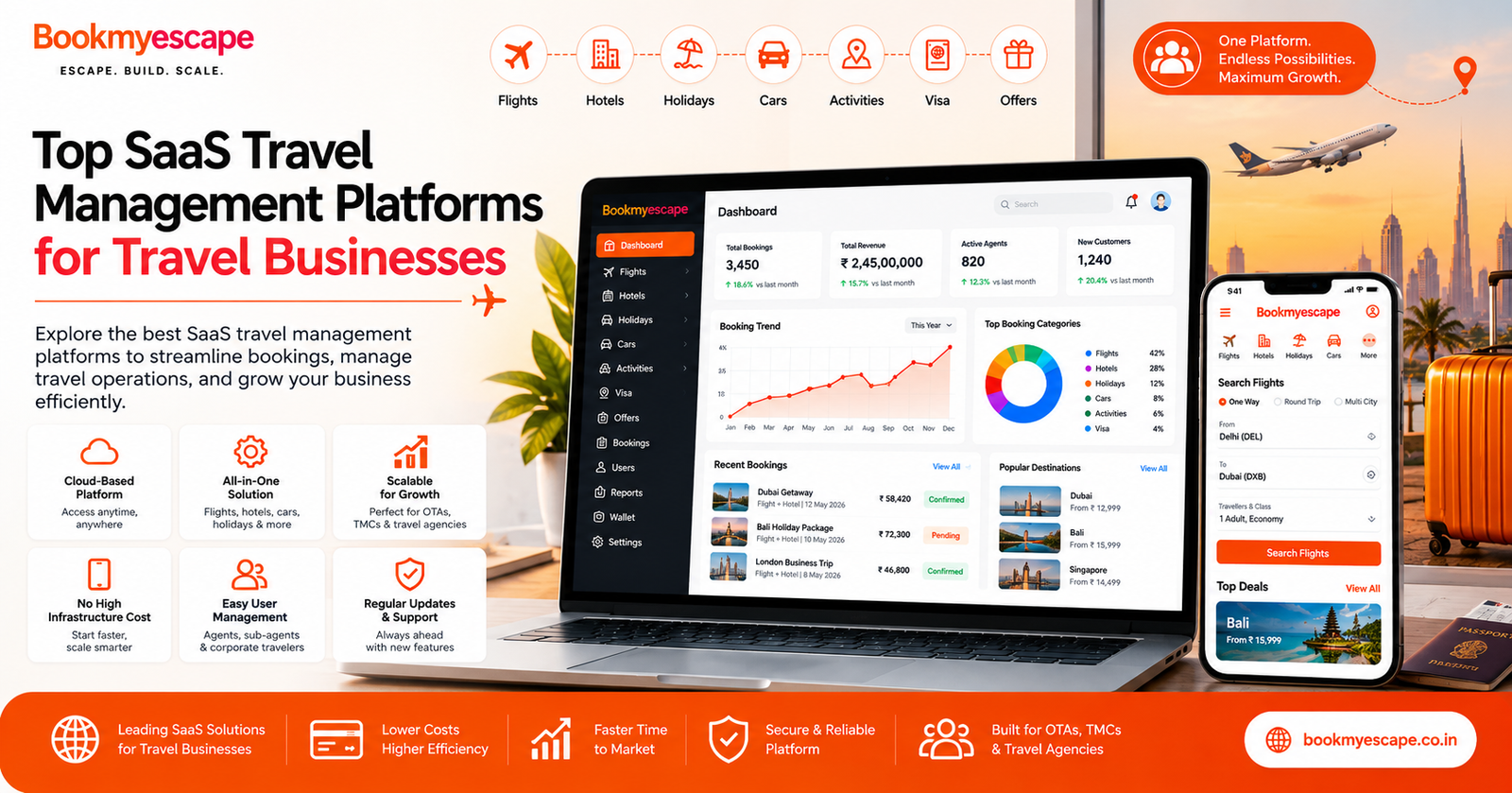
BookMyEscape is a travel technology platform focused on helping you bring booking operation supplier connections and supporting workflows into a connected system. If you are building on expanding the digital travel operations the integrated approach is worth considering. Instead of treating flights, hotels and services as entirely separate projects you can assess whether these requirements can be managed within a common platform.
2. TravelCarma
TravelCarma Provides travel technology solutions for travel agencies, tour operators and other businesses. The offerings include booking engines, travel portals, supplier integrations and itinerary workflows. One area to examine is its support for business operating through both B2 B&B 2C channels. You might sell travel directly to customers while also supplying inventory to partner agencies.
3. Trawex
Trawex Offers travel portal software and booking solutions for travel agencies and travel consolidators. You can expect booking engines for services like flights, hotels , tours and car rentals along with 3rd party connectivity and back office functions. You can consider this platform if your business wants a travel portal with several booking categories and supporting operational tools.
4. Technoheaven
Technoheaven Provides travel technology solutions for travel agencies, tour operators and other travel businesses. The product range includes B2 B&B 2C booking engines, travel portal supplier API integrations and dynamic packaging. It is a useful option for you if you are looking for a configurable travel technology solution. Smaller agencies should pay attention to implementation requirements and the level of Technical Support included in the selected package.
5. TravelTek
TravelTek offers travel booking technology, including the iSell Internet booking engine. The platform is especially relevant to travel sellers that need to manage cruise bookings alongside other travel products. If you are specializing in cruises or selling complex multi component holidays product specific booking workflows can be an important consideration.
SaaS vs. Self-Hosted Travel Software: Which Makes More Sense?
| Consideration | SaaS platform | Self-hosted software |
| Infrastructure | Generally managed by the provider | More infrastructure responsibility sits with the business or its technology partner |
| Updates | Typically delivered by the provider | Depend on the maintenance and release arrangement |
| Initial setup | Often requires less infrastructure work | May require additional setup and technical planning |
| Control | Depends on provider configuration and contract terms | Can offer greater control over the hosting environment and deployment |
| Ongoing costs | Subscription and possible usage or service fees | Hosting, maintenance, support and development costs may apply |
| Technical responsibility | Shared according to the service agreement | The business or its technology partner may manage more of the technical operation |
| Customisation | Depends on available configuration and extension options | May offer more flexibility, depending on the software and implementation |
Essential features to look for in travel management platforms
Choosing fromdthe available travel booking management system becomes really easy when you know what to look for. A long list of features is not automatically a sign of a better solution.
Supplier API integration
Supplier connectivity determines which products your business can access to the platform. Depending on your business you might need hotel suppliers, airlines and gds connections. Ask providers to identify the integrations available today whether additional integrations involve separate charges or not.
Payment and financial management
You need to manage payments, refunds and cancellations. The right system should fit how your company collects its payments. You can ask whether the platform supports your preferred payment gateways and currencies.
Reporting and booking management
A central dashboard can make it easier to review reservations and identify operational issues. Depending on your business model you might also need agent price reports and supplier performance data.
Customization and scalability
Your business requirements might change as you add suppliers, enter new markets or introduce additional travel products. The platform should be able to support your expected growth without forcing you to replace the entire system.
How to choose the right Saas travel booking platforms?
1. Start with your business model
A travel agency selling flights and hotels has different requirements from a wholesaler distributing inventory to hundreds of agents. Write down your main booking category sales channels and target markets. This will help you remove unnecessary options before spending time on detailed demonstrations.
2. Check the integrations you need
Do not choose a platform based on your number of suppliers it claims to support. Confirm it connects to specific vendors and payment providers. You need to ask for details about integration coverage and commercial agreements.
3. Calculate the total cost
You need to compare the full cost of operating each platform, not just its starting price. Depending on the provider, expenses might include setup and subscriptions.
4. Test the complete booking journey
During a demonstration, ask the provider to show a realistic booking from start to end. This would include searching for availability, confirming a reservation and issuing relevant documents. If your business works with agents, test the agent workflow also.
5. Review support and implementation
A travel platform is part of your daily business operations implementing an ongoing support matter. Ask about onboarding training and data security.
Common mistakes to avoid when choosing SaaS travel management platforms
One common mistake is selecting a software simply because it offers the largest number of features. If your team only needs a focused set of booking and operational tools, an unnecessary complicated platform can slow down adoption. Another mistake is overlooking the quality of supplier integrations. Access to inventory is important but you also need to understand booking confirmation and price changes. It is equally important not to ignore the needs of employees and agents who will use the system everyday. Finally avoid committing before reviewing the commercial agreement.
The right SaaS travel management platform can help you organize bookings, connect with suppliers and manage your operations through a more connected system.
FAQ’S
1. What happens to your booking data if you leave a SaaS travel platform?
Before leaving a SaaS travel platform, your business should understand how to retrieve its booking records, customer information, and other operational data. Check whether the provider allows data exports in usable formats, what happens to stored information when your subscription ends, and whether the contract defines data ownership and access. These details help protect business continuity if you migrate to another platform.
2. What hidden costs should you check in SaaS travel software?
When comparing SaaS travel software, look beyond the monthly or annual subscription fee. Depending on the provider, the total cost may include implementation, supplier integrations, usage-based charges, customization, training, and ongoing support. Ask for a clear breakdown of initial and recurring expenses so you can estimate the total cost of operating the platform as your booking volume grows.
3. How do you verify supplier integrations before choosing travel software?
Ask the provider to confirm which specific airline, hotel, GDS, and other supplier connections are available for your business model. Check whether integrations are included in the quoted package, whether additional development or charges apply, and how the platform handles availability, price changes, and booking confirmations. Testing your actual travel products and suppliers is more reliable than choosing a platform based only on the number of integrations it advertises.
4. Can a SaaS travel booking platform support both B2B and B2C sales?
A SaaS travel booking platform can support both B2B and B2C sales when its functionality matches the business’s requirements. B2C workflows serve customers booking directly, while B2B workflows may require agent accounts, partner access, and business-specific pricing. Before subscribing, confirm that the platform supports the necessary user permissions, pricing rules, supplier connections, and booking processes for each channel.
5. What should a travel software demo prove before you subscribe?
A travel software demonstration should show a complete booking journey using the products your business sells. Test the search process, availability and pricing, reservation confirmation, and relevant booking documents. If your business serves travel agents, test their workflows too. Ask the provider to demonstrate how it handles price changes, failed confirmations, and other exceptions instead of relying only on a presentation of its best features.
6. How do you choose scalable SaaS travel booking software?
Choose scalable SaaS travel booking software by checking whether it can support your expected growth in booking volume, suppliers, users, sales channels, and travel products. Review the platform’s customization options, integration capabilities, implementation process, and technical support arrangements. Confirm that you can add the capabilities your business needs without replacing the entire system as your operations expand.