

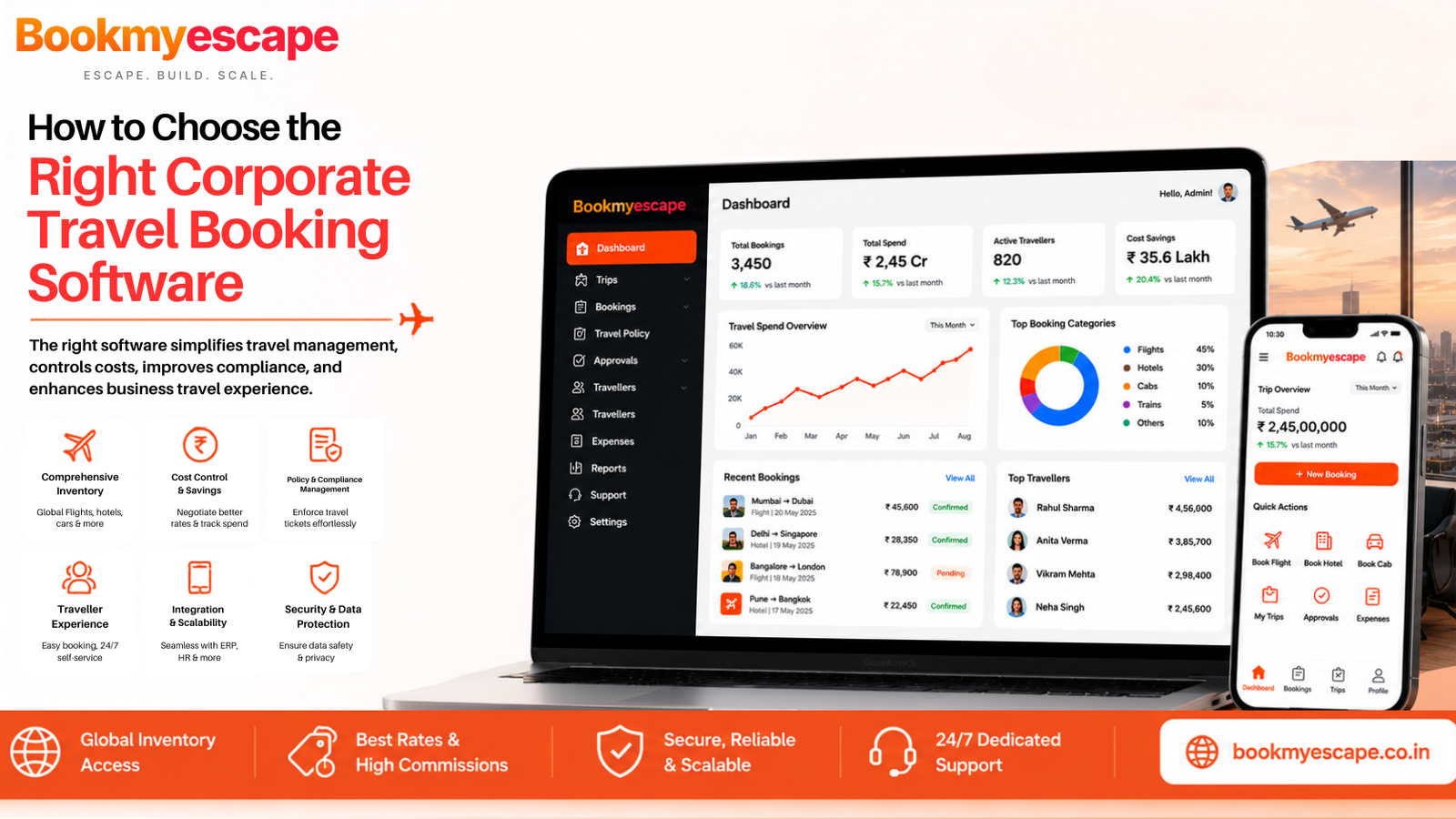
Corporate travel looks simple from the outside. An employee needs to fly somewhere, finds a suitable flight book at a hotel and gets on with the trip. But anyone managing business travel knows that the actual process is rarely simple. The traveller wants the quickest and the easiest option while the company wants the right price. Finance wants accurate spending data and travel managers need to know whether bookings follow company policy while leadership wants visibility into how much the organization is spending on travel. That is the only reason why choosing Corporate travel platforms is completely different from choosing a normal online booking website. Your platform has to satisfy 2 very different users at the same time: the person travelling and the organization paying for the trip. The right platform should combine easy employee booking with company policy controls approval workflows and centralised travel data. The challenge is finding a platform that brings all of these pieces together without making your booking experience frustrating.
Start with the traveller and the travel manager- not the software
Before you start comparing corporate travel booking platforms you need to take a step back and think about who will actually use the system.
1. What employees need
Your employees don’t want a travel booking to feel like an administrative task. They want to enter the destination and date, see useful flight and hotel options, understand which choices are allowed and complete the booking process without unnecessary steps. If they are travelling frequently they might also want their preferred airlines or loyalty numbers to be remembered. Mobile access also matters. Business travellers are not always sitting at the desk when they need to make a booking or change an itinerary. A when someone is travelling between meetings or dealing with the last minute change.
2. What travel managers need
As travel managers you might be looking at the same trip from a completely different angle. You need to know whether your employees are following company policy, how much the organization is spending, which suppliers are being used and where travel costs are increasing. You also need to manage approvals, travel information reporting supplier relationships and disruptions. A consumer platform helps someone book travel while a corporate travel platform needs to help the organization manage travel.
Map your corporate travel workflow before you compare platforms
One of the biggest mistakes you might make is choosing Custom travel portal software after seeing an attractive booking demonstration. The search page looks clean, the flight loads quickly while the hotels look good. Then implementation begins and the business discovers that approvals are really complicated and booking changes require manual intervention.
Travel request and approval
Not every business handles approvals in the same way. You might allow your employees to book directly within defined limits while others require approval for expensive trips. Your platform should support those differences.
Search and booking
The actual booking experience still matters. Employees need relevant flight and hotel choices, clear pricing and simple checkout. At the same time they should also understand which options meet company policy. Your platform should not make employees choose between convenience and compliance.
Payment
Corporate travel payments can become really complicated. As a company you can use corporate cards or virtual cards or even different payment arrangements for different departments. The payment process should connect properly with the booking record. Finance teams should not have to search through separate systems to understand what was booked and who travelled.
Changes during the trip
This is exactly where many platforms face that real test. Flights get cancelled, meetings move and employees extend their stay. Your platform should continue supporting the traveler after the original booking has been confirmed.
The booking screen is important- but it is not the whole product
A good booking interface is really valuable. But choosing Corporate travel platforms purely because the booking screen looks good is a little like choosing a car because you like a dashboard.
1. Policy enforcement
Companies might have rules around airfare hotel rates and booking windows or even spending limits. Your corporate travel booking platform should help employees follow all these policies without creating unnecessary frustration.
2. Reporting and spending visibility
A corporate travel program generates a lot of useful information. Management might want to know how much different departments spend which destinations are most expensive, whether employees are working in advance and which suppliers receive the most business.
3. Duty of care
Corporate travel also comes with a lot of responsibility for employee safety. When your employees are travelling you might need visibility into their itineraries and locations especially when major disruptions occur. A connected travel platform can make it easier to understand who is affected and what arrangements they have.
5 capabilities that will influence your decision
Rather than comparing hundreds of individual features focus on 5 areas that have direct impact on how your corporate travel program operates
Booking flexibility
Your employee should be able to book the travel services they actually need without unnecessary friction. Depending on your business this could include flights, hotels , rail rental cars and even transfers. But there is another question worth asking: will your employees actually use it? If the corporate booking process is frustrating employees might simply book directly with an airline or hotel.
Policy and approval controls
A corporate travel policy is useful only if your employees can follow it. You need to look for Custom travel portal software for different employees departments or trip types. A senior executive might have different requirements from an employee while international travel might have a different approval process from domestic travel.
Spend visibility
Finance teams need more than a monthly travel total. They should be able to understand where the money is going and identify patterns. Perhaps one route is consistently expensive. Maybe your employees are booking too close to departure. Perhaps one hotel supplier is receiving most of your company’s business.
Integration with existing business stack
Corporate travel rarely works as a standalone operation. Corporate travel platforms might need to connect with HR systems accounting software corporate cards and even CRM platforms. These integrations can remove duplicate data entry and reduce the amount of manual administration required.
Traveller support
When everything goes according to the plan, travel support might not seem particularly important. When something goes wrong it becomes very important. Your employees might need help with cancelled flights, hotel changes, refund rebooking or expected disruptions.
Corporate travel booking platform Should connect booking with what happens after the booking
The confirmation email is not the end of your corporate trip. In many cases it’s just the beginning. A traveller might change their flight or extend their hotel stay.
1. Managing changes and cancellations
Your employees should be able to understand what can be changed and what the consequences will be. A good system makes the existing itinerary easy to find and gives travelers or support teams a clear way to manage changes.
2. Handling refunds and travel credits
Unused tickets and travel credits can become difficult to track when information sets across multiple supplier systems. Your business needs visibility into unused value who it belongs to and how it can be used in future.
3. Keeping travellers informed
Travel plans can change quickly. If a flight is delayed or cancelled your travellers need timely information. Connected communication can reduce confusion and help your employees understand what they need to do next.
Corporate Travel Platform Comparison: What Should You Actually Measure?
When comparing vendors, use a consistent framework instead of letting the best sales presentation make the decision for you.
| Decision Area | What to Evaluate |
| Booking Experience | Ease of searching, booking, changing, and cancelling |
| Policy Management | Rules, approvals, exceptions, and compliance |
| Inventory | Flight, hotel, rail, and other relevant travel options |
| Business Visibility | Reporting, spend data, and traveller information |
| Integrations | HR, expense, finance, payment, and supplier connections |
| Traveler Support | Assistance before, during, and after travel |
| Scalability | Ability to support increasing employees and travel volumes |
| Administration | Ease of managing users, departments, policies, and accounts |
Don’t choose the platform with the most features- choose the one your team will actually use
This might be the most important buying principle in the entire bank decision. A corporate travel platform can have an impressive list of features and still fail if your employees don’t use it. If the booking process is slower than a consumer travel website your employees might just bypass them. If travellers need complicated workarounds to enforce policies, administration becomes frustrating. If finance teams receive analyst dashboards but can’t easily understand the data reporting is not actually helping. The best platform creates balance: employees get convenience while travel managers get control.
So choosing the right corporate travel booking platform from Bookmyescape is ultimately a business decision not just a software purchase. You need to start by understanding what your employees need and then look at what travel managers, finance teams and leadership need from the same system. The right platform should make travel easier for your employees while giving your company better control over spending policy reporting and traveller support.
Read More: B2B Tour Operator Software: A Game Changer for Travel Agencies
FAQ’S
1. What is a corporate travel platform?
A corporate travel platform is a centralized system that helps companies search, book, manage, and track employee business travel while supporting travel policies, approvals, payments, reporting, and traveler support. Unlike consumer booking websites, it is designed to serve both employees and the organization managing travel spending.
2. How does corporate travel booking software work?
Corporate travel booking software connects employees with relevant flight, hotel, rail, car rental, and other travel options while applying company rules during the booking process. It can also support approval workflows, corporate payments, booking records, itinerary management, and changes or cancellations after a trip is booked.
3. What features should a corporate travel platform have?
A strong corporate travel platform should include policy controls, approval workflows, real-time travel inventory, employee profiles, spend reporting, payment integrations, itinerary management, supplier connectivity, traveler support, and integrations with systems such as HR, finance, accounting, and expense platforms.
4. How does a corporate travel platform reduce travel costs?
A corporate travel platform can help reduce travel costs by enforcing company policies, improving visibility into travel spending, guiding employees toward compliant options, and identifying booking patterns such as expensive routes or late reservations. Centralized reporting also helps travel managers identify opportunities to control recurring expenses.
5. Can corporate travel software manage travel approvals?
Yes, corporate travel software can support approval workflows based on company rules, employee roles, departments, trip types, or spending limits. Businesses can allow employees to book within predefined limits while requiring approval for trips that exceed specific policies or budgets.
6. Why is duty of care important in corporate travel?
Duty of care is important because companies need visibility into employee travel and the ability to respond when disruptions affect their travelers. A connected corporate travel platform can provide itinerary and traveler information, helping travel teams identify affected employees and communicate important updates during cancellations, delays, or other disruptions.