

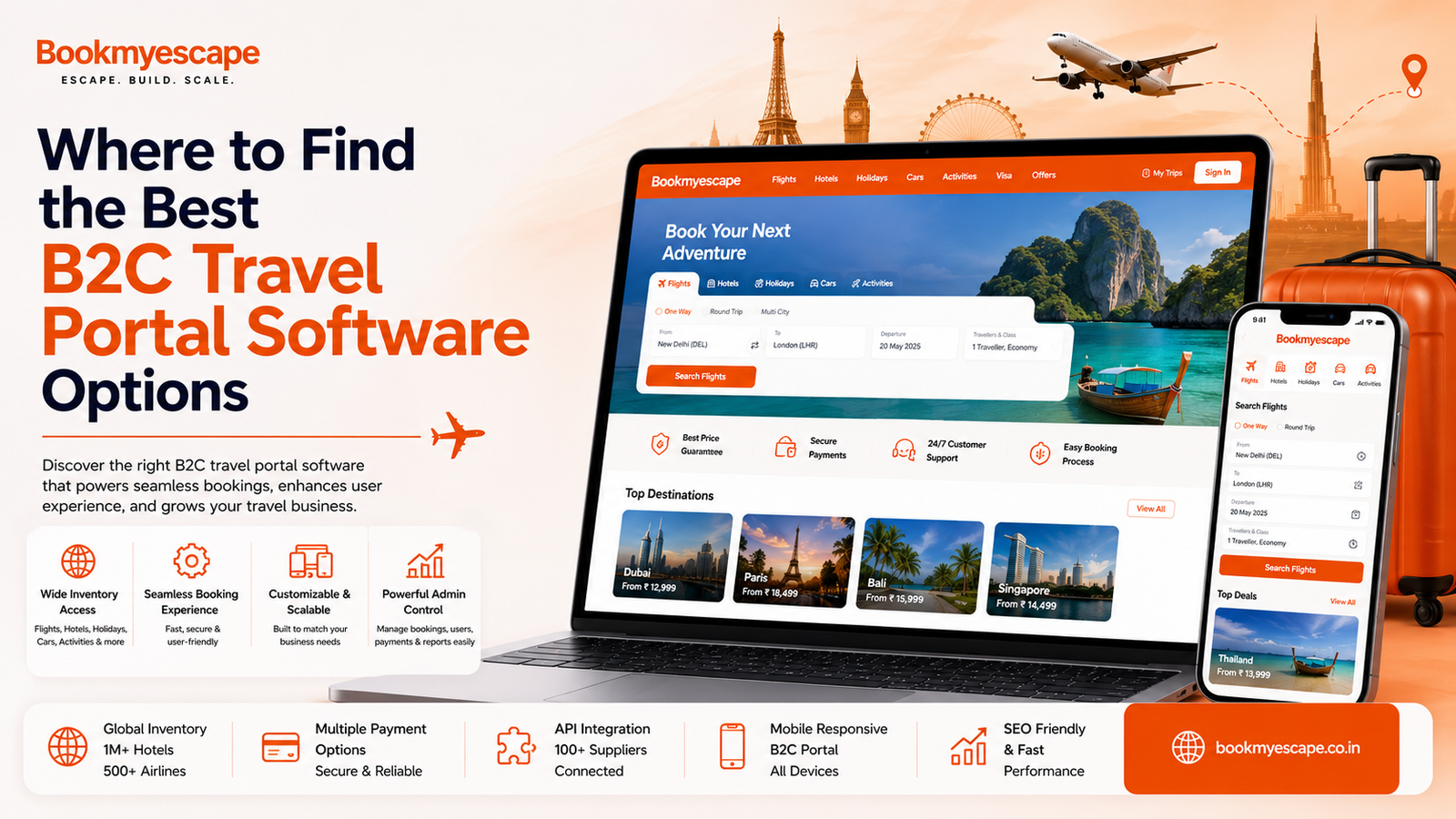
The way people book travel has completely changed. A traveller searches for a destination, compares prices, checks reviews and expects to complete the booking within minutes. If the experience feels really slow or confusing they won’t hesitate to leave and book elsewhere. For your travel business this makes the online booking experience far more than just a digital storefront. Your B2C Travel Portal influences your customers to discover your services, how easily they complete a booking and whether they choose to return for their next trip or not. At the same time customer expectations continue to evolve. Travelers expect real time availability, transparent pricing and secure payment options. Choosing the right software is therefore a strategic decision. It affects customer satisfaction, operational efficiency, supplier connectivity and your ability to introduce new travel products without adding unnecessary complexity. With so many software providers offering similar features, comparing products on specifications alone rarely leads to the right choice. The best solution depends on your business model, the travel services you offer and your target audience.
Why choosing the right B2C Travel Software matters more than ever?
The online travel industry has become more competitive than ever. Travelers have countless booking platforms to choose from and switching between websites takes only a few seconds. If your platform is slow or doesn’t provide the experienced customers expect they will quickly move on to another option.
1. Traveler expectations continue to rise
Customers have become accustomed to seamless digital experiences in almost every part of their lives. When booking travel they expect to find relevant travel options quickly and book securely in just a few steps. If the booking journey feels complicated or time consuming there is a good chance they will just leave your website before completing the purchase.
2. Competition is no longer limited to local travel agencies
in the past you had to compete within the local markets. Today your customers can compare offers from global online travel agencies, airline websites, hotel booking platforms and other travel companies all within minutes. This means you need to differentiate yourself through more than pricing alone. A smooth booking experience, faster search results and customized recommendations all contribute to creating a stronger competitive advantage.
3. Faster bookings lead to Better Business outcomes
Every additional step in the booking process increases the chance that a customer might leave before completing the reservation. Simplifying the booking journey might help reduce friction and also improve conversion rates. When your customers can easily reach and book preferred travel services you can benefit from higher booking volumes and improved customer satisfaction.
Before comparing software define what your business really needs
One of the biggest mistakes that you might make is comparing software based only on your feature lists. A platform might include hundreds of features but it does not align with your business model or solve operational challenges it won’t deliver the results that you are looking for. Before evaluating online travel b2c portal solutions you need to take time to understand your business requirements.
Are you selling flights, hotels or everything?
Every travel business offers a mix of services. Some specialize in airline bookings while others focus on hotels and custom holiday packages. Understanding your product strategy helps determine the type of portal you need. For example if you are focused on flight bookings you need to prioritise speed and airline integrations. Choosing software that aligns with your offerings creates a better experience for both you and your customers.
Who is your target customer?
Not every traveler books in the same way. A family planning an annual vacation has different expectations from a corporate traveller or a backpack looking for budget friendly options. Understanding your target audience helps shape the booking experience that you want to deliver. Consider factors like preferred booking channels and travel preferences.
What are your current operational challenges?
Technology should solve your problems, not create new ones. Before comparing software providers identify the operational challenges that your business faces today. You might be dealing with manual booking processes, time consuming inventory updates and difficulty managing multiple suppliers. Understanding these pain points help you focus on custom solutions that deliver real business value instead of just being distracted by features that you might never use.
What makes a great B2C Travel Portal?
Choosing a B2C travel portal is not just about finding a software with a long list of features. It’s all about finding a platform that makes travel booking easier for your customers while helping your team manage operations effectively.
1. Fast and simple booking experience
When your travellers book online they expect the process to be quick and simple. From the moment they search for a destination of the final payment every step should feel intuitive. Complicated navigation or confusing booking flows can increase drop off rates and affect conversions. A well designed portal helps your customers find what they are looking for quickly and complete booking with minimum effort.
2. Real time inventory and pricing
Travel information changes constantly. Flight fares fluctuate, hotel availability updates throughout the day and holiday package pricing might vary depending on demand. Customers expect the information displayed on your website to be accurate at the time they book. Real time inventory and pricing improve customer confidence and minimize the need for manual intervention by your team.
3. Secure payments and checkout
Trust plays a very important role in online travel bookings. Your customers are sharing payment details and making significant purchases so they need to feel completely confident that every transaction is secure. A smooth checkout experience with trusted payment options and clear booking confirmations help build credibility while reducing abandoned bookings.
4. Mobile friendly customer experience
A growing number of travelers research and book trips using their smartphones. Whether they are planning a holiday during their commute or booking a last minute hotel while travelling they expect the same experience on mobile as they do on the desktop. A responsive mobile friendly portal allows your customers to search, compare and manage the reservations easily from any device.
Not all B2C Travel Software is built for the same business model
One of the biggest misconceptions when selecting an online travel b2c portal is believing that one solution fits every travel business. In reality different businesses have different priorities, customer expectations and operational workflows. A platform that’s ideal for a large online travel agency might not be the best choice for a niche tour operator.
Traditional travel agencies
Traditional travel agencies often combine online bookings with customized customer experience. Many customers still seek expert guidance before confirming holidays or customized itineraries. For these businesses the portal should simplify booking management while supporting efficient customer communication.
Online travel agencies
Online travel agencies manage high booking volumes and offer multiple travel products through one platform. The software should support increasing traffic and multiple travel services without affecting performance or customer experience.
Tour operators
Tour operators just focus on curated travel experiences rather than individual bookings. If you are one of them you need greater flexibility when creating packages or managing itineraries. Your priority is delivering customised travel experiences while keeping operations organized behind the scenes.
Travel startups
Travel startups need technology that allow them to launch quickly while leaving room for future expansion. The right platform should support our growth without requiring a complete rebuild as new suppliers or travel services are added.
Choosing the Right Portal for Your Business Model
| Business Type | What to Prioritize in a B2C Travel Portal |
| Travel Agency | Easy booking management, customer communication, and efficient service |
| Online Travel Agency (OTA) | High scalability, fast performance, and multiple travel API integrations |
| Tour Operator | Flexible package management, itinerary creation, and group booking capabilities |
| Travel Startup | Quick deployment, scalability, and room to expand services over time |
| Niche Travel Business | Personalised booking journeys and specialised booking workflows |
Questions to ask before choosing an B2C Travel Portal
Once you have identified the software that appears to meet your requirements the next step is to ask the right questions. Look beyond product demonstrations and feature lists as this will help you evaluate whether the platform will continue supporting your business as it grows.
1. Can the platform scale with your business?
Your Business Today might look very different from your business 3 years from now. You might expand into new destinations or introduce holiday packages. Choosing software that can grow alongside your business reduces the need for expensive platform changes later.
2. Does it integrate with travel apis?
Most modern travel businesses rely on multiple technology providers. Flights, hotel transfers and customer communication tools often need to work together. Before making a decision understand how easily the portal integrates with existing and future travel APIs. Greater flexibility today can save a lot of effort in the future.
3. Is the platform easy to manage?
A customer friendly interface is very important but so is the experience for your internal team. Ask yourself can staff manage bookings effectively? Is updating travel content simple? Can promotions and offers be added easily? Software should simplify operations rather than create additional administrative work.
4. What support does the provider offer?
Technology projects don’t end after launch. Software updates, technical issues, new integrations and evolving business requirements all require ongoing support. When evaluating providers, consider response times, technical expertise, product updates and training resources.
Common mistakes businesses make when selecting B2C Travel Software
Choosing a travel software is a long term investment yet many businesses just focus on short term priorities during the selection process.
Choosing based only on price
Lower upfront costs seem very attractive but they do not always represent better long term value. A platform lacking essential capabilities or requires frequent custom development can become more expensive with time.
Ignoring future ability
Some businesses choose software that meets their current requirements but struggles to support future growth. As booking volumes increase or new travel products are introduced the platform might require costly upgrades or replacement.
Overlooking user experience
A portal with powerful functionality won’t deliver results if customers find it difficult to use. Complicated navigation or lengthy booking processes can reduce conversions regardless of the platform’s technical capabilities.
Beyond software biotechnology partner matters?
Choosing an online travel b2c portal is only a part of the decision. The company behind the software can have just as much of an impact on your long term success as the platform itself. A travel portal is not something that you launch once and forget. Customer expectations change, APIs evolve and your business grows. Having a technology partner that supports you through these changes can make the difference between a platform that keeps pace with your business.
1. Look for industry experience
Travel technology comes with its own complexities. From integrating airline and hotel APIs to managing dynamic pricing cancellations and supplier connectivity, there are countless moving parts behind every successful booking. A technology partner with experience in the travel industry understands all the challenges and can also recommend solutions based on practical knowledge rather than generic development.
2. Ongoing updates keep your platform competitive
The travel industry never stands still. New travel trends emerge, suppliers update their systems and customer expectations evolve to improve. Your software should evolve alongside these changes. Regular product updates help your platform remain competitive while ensuring customers enjoy a smooth booking experience.
3. Reliable Technical Support matters
Even the best software occasionally requires assistance. Whether you are integrating a new supplier or resolving a technical issue, responsive support can minimize disruption to your business.
So you must know that finding the right B2C travel portal is way more than just comparing features or selecting the lowest priced solution. The best platform is the one that supports the way your business operates and aligns with your long term goals. Every travel business has different priorities. A travel agency focused on customized service will have different technology requirements as compared to high volume OTA. A scalable B2C travel software solution can help you expand your travel inventory and connect with multiple suppliers while automating routine processes and improving customer engagement. To learn more about a B2C travel portal you can connect with experts at Bookmyescape.
Read More: How an Online Travel Agency Software Improves Profit Margins
Frequently Asked Questions for B2C Travel Software
1. What is B2C travel portal software?
B2C travel portal software is an online booking platform that allows travelers to search, compare, and book flights, hotels, holiday packages, transfers, and other travel services directly from a travel company’s website. It automates booking management, payment processing, and supplier connectivity while delivering a seamless customer experience.
2. What are the benefits of a B2C travel portal?
A B2C travel portal helps travel businesses automate bookings, offer real-time pricing, improve customer experience, increase direct online sales, reduce manual work, support multiple payment methods, and integrate with travel suppliers through APIs. It also enables businesses to scale efficiently as booking volumes grow.
3. How much does B2C travel portal software cost?
The cost of B2C travel portal software depends on factors such as platform customization, travel API integrations, supported travel services, design complexity, and ongoing maintenance. Custom-built solutions generally require a larger investment than ready-made platforms but provide greater flexibility and long-term scalability.
4. Can a B2C travel portal support multiple travel APIs?
Yes. A modern B2C travel portal can integrate multiple travel APIs for flights, hotels, transfers, activities, cruises, and car rentals. Multi-API integration expands travel inventory, improves pricing options, and gives customers more booking choices from a single platform.
5. Is a B2C travel portal suitable for startups?
Yes. B2C travel portal software is suitable for startups because it provides a scalable foundation for selling travel services online. Startups can launch with essential booking features and gradually add new suppliers, payment gateways, travel products, and automation tools as their business grows.
6. What features should the best B2C travel portal have?
The best B2C travel portal should include real-time search, live pricing, travel API integration, secure payment gateway, responsive mobile design, booking management, customer accounts, multi-currency support, multilingual functionality, reporting, and an easy-to-use admin dashboard. These features improve both customer satisfaction and operational efficiency.