

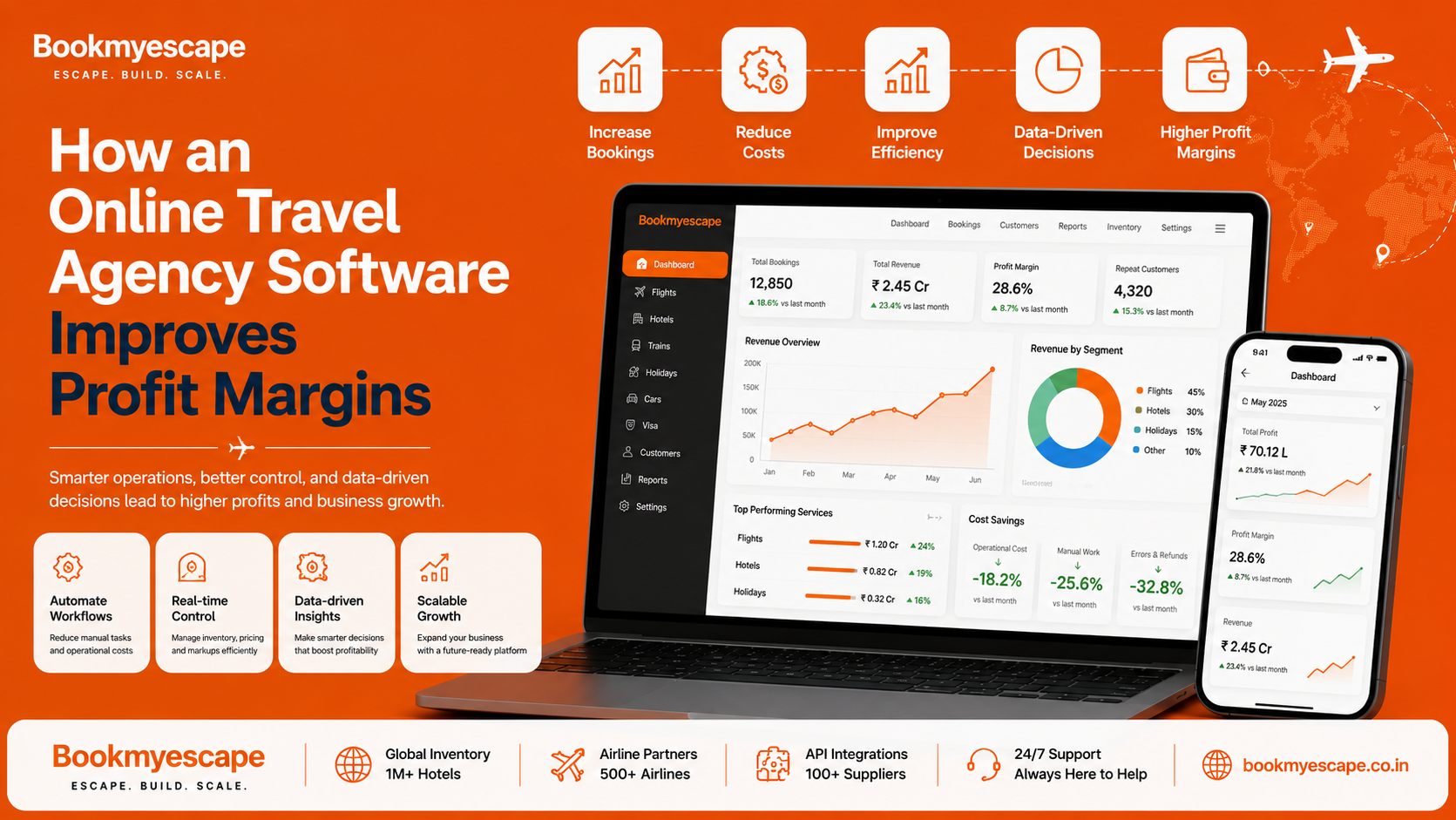
Ask most travel business owners what they want and the answer is usually the same: more bookings, more customers and more reservations. Of course more revenue sounds like the perfect formula for growth. But here is something that you might discover as you grow that more bookings do not always mean more profit. Just imagine your team handling hundreds of bookings every week. If they are manually checking availability and updating prices and responding to customer queries 1 by 1 every additional booking also adds more work. With time those extra tasks increase operational costs slow down your team and reduce the profit you earn for each reservation. At the same time customer expectations continue to rise.
Your travelers expect instant results, accurate pricing and quick confirmations across every device. Meeting these expectations with manual processes becomes really difficult as your business grows. That is exactly where the OTA Platform truly makes a difference. The right software doesn’t just automate your bookings, it also helps your travel business work more effectively, reduce unnecessary costs and create stronger foundations for long term growth. Instead of spending time on repetitive administrative work you can just focus on serving your customers and building relationships.
Why more bookings are not always mean higher profits
At first glance more bookings seem like a guaranteed way to increase your profit. But every booking comes with a cost and those costs are often higher than many travel businesses realize.
1. Every booking has certain costs
processing a booking involves much more than just confirming the reservation. Your team needs to search multiple suppliers, compare prices, update customers and even process payments. When these tasks are handled manually every booking requires time and resources. As booking volume increases, operational costs also increase.
2. Manual operations reduce efficiency
Manual work slows your business. Your employees spend more time entering customer details and checking availability. Not only does this reduce your productivity but also limits the number of bookings your team can handle.
3. Customer acquisition is expensive
Winning a new customer often requires investment in advertising and social media besides partnerships. If operational inefficiencies reduce your profit on each booking, recovering those acquisitions costs becomes much more difficult. Improving efficiency helps you earn more from every customer that you already have.
4. Booking errors cost more than you think
Mistakes happen when information is handled manually. Incorrect passenger details or pricing errors, duplicate bookings and delayed confirmations can lead to refunds and unhappy customers. Even small errors can damage your reputation.
Where do travel businesses lose profit without the right technology?
Profit doesn’t disappear overnight. It slowly leaks away through small errors that often go unnoticed until they start impacting your business.
Time consuming booking process
When staff spend too much time processing each booking they have minimum time to generate new business. Long booking workflows reduce your productivity and increase labor costs. Automation allows you to focus on sales and customer relationships.
Delayed customer response
Your travelers expect answers quickly. If customers have to wait for a flight code or hotel confirmation they might simply book elsewhere. Slow response times don’t just impact your customer satisfaction but it also reduces conversion rates.
Managing multiple suppliers manually
You might work with several airlines or hotel transfer companies. Without centralized systems your staff might need to switch between multiple supplier portals throughout the day.
Pricing errors
Travel prices change constantly. Manually updating all the prices can increase the risk of errors or hotel rates. Incorrect pricing can result in lost revenue and booking disputes.
How Online Travel booking system changes the economics of travel business
The value of Online Travel Agency Software is not measured only by the features it offers. Its real value comes from how it changes the way your business operates.
1. Faster booking workflows
Automation speeds up the entire process. Instead of manually searching suppliers or updating customers, bookings moved through the system much more effectively.
2. Lower operational costs
Reducing manual work means fewer repetitive tasks for your team. As productivity improves you can manage higher booking volumes without proportionally increasing staffing costs.
3. Better staff productivity
Your employees spend minimum time on administration and more time supporting your customers generating sales and solving complex travel requirements. Technology supports people, it doesn’t replace them.
4. Improved customer retention
Fast service, accurate bookings and smooth customer experiences encourages repeat bookings. Returning customers are generally more profitable than constantly acquiring new ones.
5. Greater booking capacity
As demand increases automated systems help you manage more bookings without creating operational bottlenecks. Growth becomes easier when you are not relying entirely on the manual process.
The profit drivers built into a modern OTA platform
A modern Online Travel booking system is not just about collection of software features. Each capability has the potential to improve profitability by reducing costs and increasing revenue.
Automation that reduces operating costs
Routine tasks like booking confirmations and payment updates can all be automated. This reduces administrative work while allowing your team to focus on activities that generate revenue.
Real time pricing that protects margins
Displaying accurate pricing helps avoid booking disputes and unexpected losses caused by outdated features. You can also gain better confidence when prices remain consistent throughout the process.
Centralized booking management that saves time
Managing bookings through one system instead of multiple supplier portals improves efficiency. Your staff spends minimum time switching between platforms and more time helping customers.
Cross selling and upselling opportunities
A traveler booking a flight might also need a hotel. Someone booking a hotel might need airport transfer or travel insurance. A well designed Online Travel Agency Software makes it easier for you to recommend extra services during the booking journey. These extra sales increase average booking value without acquiring new customers.
Customer data that improves repeat bookings
Understanding customer preferences helps you create a more customized experience. Returning travelers appreciate relevant offers and loyalty rewards based on previous bookings.
Manual Operations vs Online Travel Booking System: What Does It Really Cost?
| Business Area | Manual Operations | Online Travel Booking System |
| Booking Processing Time | Staff spend significant time processing each booking manually. | Automated workflows reduce booking time and improve efficiency. |
| Staff Productivity | Employees spend more time on administrative work than customer service or sales. | Teams can handle more bookings while focusing on customer relationships and business growth. |
| Error Rate | Manual data entry increases the risk of pricing, booking, and customer information errors. | Automation improves accuracy and reduces costly mistakes. |
| Customer Response Time | Customers may wait longer for confirmations and booking updates. | Faster responses improve customer satisfaction and conversion rates. |
| Revenue Opportunities | Cross-selling often depends on manual recommendations. | The system can automatically recommend hotels, insurance, transfers, and other travel services. |
| Reporting | Reports are often created manually and may not provide real-time insights. | Live dashboards help monitor bookings, revenue, customer trends, and business performance. |
| Scalability | Growth usually requires hiring additional staff. | The platform supports higher booking volumes without increasing operational workload at the same pace. |
| Profit Potential | Profit margins can shrink as manual work increases operating costs. | Automation helps reduce costs, improve efficiency, and protect profit margins over time. |
The most profitable travel businesses focus on more than bookings
You might measure success by the number of bookings you receive. No doubt bookings are very important but the most profitable travel companies look way beyond that just individual transactions. They focus on building long term customer relationships and improving the overall efficiency.
1. Customer lifetime value
A traveler who books once is really valuable. But a traveler who returns every year and recommends your business to others is even more valuable. Instead of just focusing on acquiring new customers you must invest in creating experiences that encourage repeat bookings.
2. Repeat businesses drives better margins
Winning a new customer often involves advertising promotions and marketing. Returning customers already know and trust your business making them less expensive to claim. A strong OTA Platform helps you maintain the relationships through booking history, customized offers and smoother customer operations.
3. Customization creates better expenses
your travelers might appreciate recommendations they’re interested in. For example, someone who frequently books family holidays might appreciate offers for child-friendly resorts while a business traveler might value flexible booking options and airport transfers. Relevant recommendations improve your customer satisfaction while increasing booking value.
4. Loyalty programs encourage customers to return
Reward points, exclusive discounts, early access to offers or membership benefits give your customers a reason to book with you again instead of trying another platform. Even simple loyalty initiatives can make a meaningful difference.
5. Operational efficiency protects profit margins
You might waste less time, reduce unnecessary costs and handle more bookings without increasing operational pressure. The result is a higher profit margin and more sustainable growth.
Signs your travel business has outgrown manual booking process
You might not even realize that you have outgrown manual operations until everyday tasks begin taking longer than they should.
Your team spends more time managing bookings and selling
When your staff spends most of their time updating reservations or checking availability they have less time to generate new businesses or strengthen customer relationships.
Customer response times are increasing
Your travelers expect quick answers. Customers are regularly waiting for quotes or booking confirmations. Your current process might be slowing your business down.
Booking errors are becoming more common
As booking volumes increase manual work naturally creates more opportunities for mistakes. Incorrect passenger information or pricing errors can impact your profitability and customer trust.
Managing suppliers is becoming more difficult
Working with multiple airlines, hotels and transfer providers and activity supplies through separate systems can quickly become complicated. A centralized platform simplifies the supplier management while reducing manual work.
Choosing an Online Travel booking system that supports long term growth
Not every software solution is designed to support your long term business. When evaluating Online Travel Agency Software it’s very important for you to think beyond the features you need today.
1. Scalability
Your platform should continue performing well as bookings increase. Choosing a scalable system helps avoid expensive migrations and redevelopment later.
2. API integration capabilities
The travel industry relies on connected platforms. Your software should easily integrate with flight APIs and hotel suppliers. Greater flexibility makes future expansion even much easier.
3. Customization
Every travel business is different. The ability to customize booking workflows and pricing rules besides customer experiences allows your platform to support your unique business model.
4. Clear user experience
a clean and intuitive booking experience improves your customer satisfaction while increasing booking conversations. the easier your platform is to use the more likely your customers are to complete the reservation.
5. Automation
Automation saves a lot of time, reduces errors and improves operational efficiency. From booking confirmation to payment processing and customer communication automated workflows directly support your profit margins.
6. Security
Your travel business should handle sensitive custom information and financial transactions perfectly. Strong security measures help protect both your customers and your business while building trust.
Profitably doesn’t come from software alone it comes from how you use
Align technology with business goals
You should not automate the process simply because you can. You need to use technology to solve business challenges and improve customer experience. Even the most advanced software won’t improve profitability if your employees don’t know how to use it effectively.
Monitor business performance
You need to track important matrices like booking conversion rates and repeat customers. Reviewing all these numbers regularly helps identify areas for improvement.
Keep improving the booking experience
Your customer expectations continue to change. Regularly you need to review your website and booking process to ensure that it remains simple and efficient. Small improvements often lead to meaningful increases in customer satisfaction.
So you need to know that growing a travel business is not just about processing more bookings. Sustainable profitability comes from building efficient operations and making informed decisions while creating experiences that encourage customers to return. A modern online travel agency software from Bookmyescape provides the technology needed to automate routine work and improve booking accuracy while increasing staff productivity and supporting better customer experience.
Read More: Online Travel Agency Software: Common Mistakes and Challenges
FAQ’S
1. How does an OTA platform increase travel business profits?
An OTA platform increases profitability by automating bookings, reducing manual work, minimizing operational costs, improving booking accuracy, and enabling travel businesses to sell additional services like hotels, transfers, insurance, and holiday packages through a single booking journey.
2. Can an online travel booking system reduce operational costs?
Yes. An online travel booking system automates repetitive tasks such as booking confirmations, payment processing, supplier synchronization, and customer notifications. This helps reduce staffing costs, minimize booking errors, and improve overall business efficiency.
3. What features should an OTA platform have to maximize revenue?
A profitable OTA platform should include real-time inventory, dynamic pricing, API integrations, secure payment gateways, CRM integration, cross-selling tools, multi-currency support, automated booking management, analytics dashboards, and personalized customer recommendations.
4. Why is automation important for online travel agencies?
Automation allows online travel agencies to process more bookings with fewer resources, deliver instant confirmations, improve response times, reduce human errors, and provide a better customer experience, all of which contribute to higher profitability and business growth.
5. How does an OTA platform improve customer retention?
An OTA platform improves customer retention by offering personalized travel recommendations, faster booking experiences, loyalty programs, booking history, targeted promotions, and seamless customer support, encouraging travelers to return for future bookings.
6. When should a travel business upgrade to an OTA platform?
A travel business should upgrade to an OTA platform when manual booking processes become inefficient, booking volumes increase, multiple supplier integrations are needed, customer expectations grow, or the business plans to expand into new travel products, markets, or B2B services.